


Performance Metrics
In this Supply Chain Byte, Lisa Anderson shares practical insights on how manufacturers should think about performance metrics to make critical operational and strategic decisions that drive supply chain success.
In this episode of Supply Chain Chats, Lisa Anderson talks with Eric P. Rose about the realities of bringing new products to market in today’s complex supply chain environment. Watch the full discussion to learn how organizations can develop innovative products that not only excite the market but can also be produced efficiently and profitably.
Although there are plenty of issues related to the War in Iran, from a supply chain perspective, the key issue is that the Strait of Hormuz has been blocked. This supply chain chokepoint is limiting the movement of energy. We discuss take aways related to demand, supply, flow and location.
Lisa Anderson, a supply chain expert and founder of the LMA Consulting Group, explains to The Press-Enterprise that Rule 2305 (The Warehouse Indirect Source Rule), designed to help erase airborne toxins linked to many health threats, is seen as burdensome and costly by warehouse owners and operators.
Lisa Anderson is highlighting vulnerabilities in global supply chains as the recent conflict involving Iran creates ripple effects across global trade, energy markets and critical manufacturing components.
While the personnel who show up at your door might not be wearing actual white gloves, the term “white glove delivery” conveys the impression of a premium service delivered with concierge-like professionalism and attention to detail. It is defined less by speed and more by service depth, especially for high-value, bulky, or complex products.
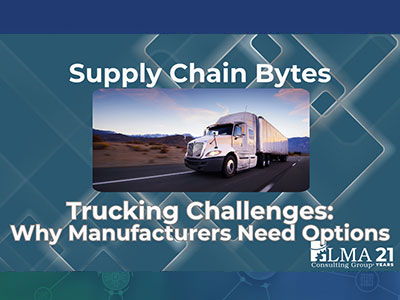
In this Supply Chain Byte, Lisa Anderson discusses what is happening across trucking, package shipping and ocean freight - and why understanding demand and supply dynamics within transportation is critical to maintaining profitability and success.
In this Supply Chain Byte, Lisa Anderson explains why the Iran conflict and the Strait of Hormuz matter to manufacturers. As one of the most critical shipping chokepoints in the world, disruptions in this region can impact global trade, energy supply and transportation costs.
As the conflict disrupts key trade routes and energy supplies, the confectionery sector is among the first to feel the strain. How vulnerable are manufacturers, and what can be done to protect the industry? Lisa Anderson discusses supply chain protection and safeguarding supplies to ensure availability.
As with every war, there are immediate supply chain impacts, down-the-line impacts and related manufacturing and supply chain requirements. Companies must be prepared to pivot resiliently, scale, and plan to ensure customer and EBITDA success.