

909.630.3943

Supply Chain Planning

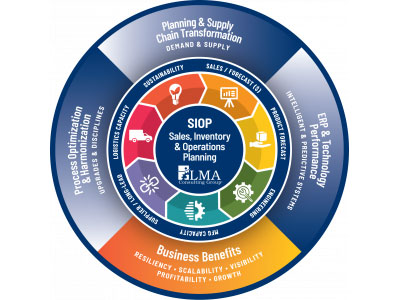
Supply Chain Planning provides the integrated framework to align demand, supply, capacity, production, inventory, and distribution, enabling predictable revenue fulfillment, superior customer service, resilient operations, and profitable growth. Explore insights on SIOP (Sales Inventory Operations Planning), demand planning, capacity and resource planning, production and materials planning, inventory planning, and network strategy. Learn how manufacturers and distributors leverage integrated planning, technology enablement, data, and analytics to improve visibility, optimize working capital, resolve constraints, and execute with confidence.

Supply Chain Network Strategy & Optimization: Building for Profitable Growth

Learn how network strategy and optimization improve customer service, profitability, resilience, and scalable growth by aligning demand, capacity, sourcing, inventory, and distribution.

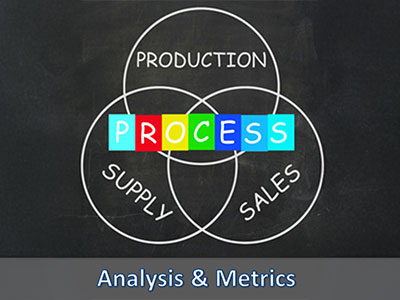
SIOP Metrics: 5 KPIs Every Manufacturer Should Track

Track the five essential SIOP metrics that improve forecast accuracy, customer service, inventory, capacity, and profitability to drive predictable growth.

The Manufacturing Boom: Are You Ready to Scale?

Manufacturing is gaining momentum, creating significant opportunities for companies prepared to scale. Learn how to strengthen demand planning, assess end-to-end capacity, leverage technology strategically, and position your business for profitable growth.

SIOP Is More Than Demand Planning – It Is the Control Tower for Business Performance

Successful SIOP goes far beyond forecasting and monthly meetings. Lisa Anderson explains how connecting people, processes, and decisions across the enterprise creates one version of the truth, enabling manufacturers to improve predictability, agility, profitability, and long-term scalable growth.

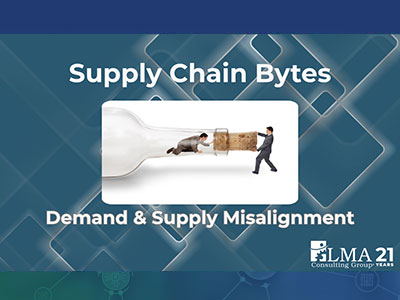
Demand & Supply Misalignment

In this Supply Chain Byte, Lisa Anderson discusses why manufacturers must align demand and supply at each step of the supply chain, using California’s oil and gas and refinery capacity challenges as an example of how reduced capacity can create ongoing pressure and an operational bottleneck.

Manufacturers Should Not Confuse AI Tools with Effective SIOP Processes

Lisa Anderson explains why AI cannot replace a formal SIOP process. While technology can improve analysis and decision-making, successful planning still requires strong business processes, cross-functional alignment, operational discipline, and organizational accountability.

Supplier Issues

In this Supply Chain Byte, Lisa Anderson explains why companies must pay close attention to demand signals, translate demand into supply requirements and confirm whether suppliers truly have the capacity to support the plan. Knowing when materials will arrive and having a clear ETA is critical.

Building a Foundation for Growth

Avtron Power Solutions partnered with LMA Consulting Group to improve capacity planning, optimize SAP Business One, strengthen MRP capabilities, and implement a proactive SIOP process. The result was greater visibility into future demand, improved customer commitments, right-sized inventory, and a scalable foundation that supported record revenue growth.

How Frazier Improved Visibility, Planning, and Customer Fulfillment

Frazier Industrial partnered with LMA Consulting Group to improve visibility across customer demand, production planning, capacity, and order fulfillment. Through ERP enhancements, advanced planning tools, scheduling improvements, and SIOP-driven decision-making, the company stabilized operations, improved customer service, and created a stronger foundation for growth.

The LMA Difference

When Armacell's OTIF performance fell to 38%, the company partnered with LMA Consulting Group to strengthen planning processes, optimize SAP capabilities, and improve cross-functional collaboration. Through SIOP improvements, data-driven decision-making, and sustainable process changes, Armacell increased OTIF performance to more than 90%, improved customer satisfaction, and built a stronger foundation for long-term growth.

Go to Top