
909.630.3943

Supply Chain Planning

Supply Chain Planning provides the integrated framework to align demand, supply, capacity, production, inventory, and distribution, enabling predictable revenue fulfillment, superior customer service, resilient operations, and profitable growth. Explore insights on SIOP (Sales Inventory Operations Planning), demand planning, capacity and resource planning, production and materials planning, inventory planning, and network strategy. Learn how manufacturers and distributors leverage integrated planning, technology enablement, data, and analytics to improve visibility, optimize working capital, resolve constraints, and execute with confidence.

Regaining Control of Your Supply Chain

The statistics have been staggering. Supply chain disruptions have cost companies an average of $182 million in lost revenue, according to an Interos Supply Chain report. Additionally, there are many unhappy customers in the wake of these disruptions. The bottom line is that the global supply chain [...]
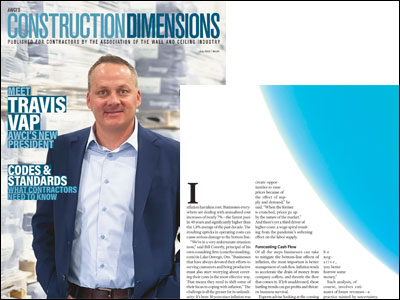
AWCI Construction Dimensions: Inflation Busters: Protecting Profits As Costs Rise

Lisa Anderson, manufacturing and supply chain expert and president of LMA Consulting Group states there are operational and supply chain priorities required to be ready to absorb additional sales". One of the most important components is to have planning and scheduling processes required to be ready to absorb capabilities.

Upgrade Demand Planning Processes & Software to Navigate Economic Challenges

During times of volatility including inflation and recession, forecasting future sales becomes even more vital than it is during regular business cycles. Emerging from the pandemic, the global markets have experienced rising costs and significant demand. In the U.S. [...]

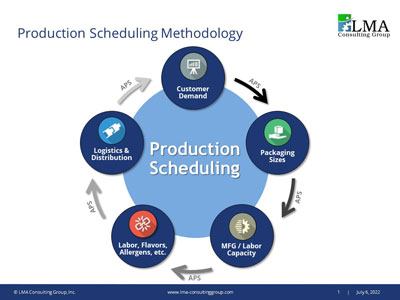
Production Scheduling Best Practices Drive Increased Customer Service, Operational Efficiencies & Inventory Turns

Manufacturing has struggled to produce what customers want on-time without spending a fortune and tying up excess cash unnecessarily in the wrong, "just-in-case" inventory. It is a tough environment spiraling out of control with supply chain chaos.

Are You Managing Inventory or Is Inventory Managing You?

As executives continue to navigate these volatile economic conditions, the focus on inventory management increases. It is especially tough to determine what to do if you don't know if sales opportunities will dramatically increase as the competition falters and consumers drive demand or if sales will tank as recession fears increase and business optimism falters.

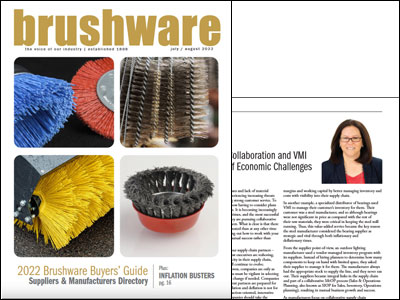
Supply Chain Collaboration & VMI to Get Ahead of Economic Challenges

Manufacturers are experiencing continued inflationary pressures threatening customer service and profit margins with record-breaking price increases and lack of material availability.  To add fuel to the fire, they are also starting to worry about preparing for a potential recession.

After a Year of Shortages, Here’s Why Stores Suddenly Have too Much Stuff

Lisa Anderson, a supply-chain management expert and the president of LMA Consulting Group, says if you’ve got the cash on hand now,"it’s not a bad idea to start your holiday shopping early this year."

Do You Need Software to be Successful with S&OP?

As clients become interested in S&OP (Sales & Operations Planning), also known as SIOP (Sales, Inventory, and Operations Planning) to get in front of customer requirements while simultaneously increasing margins and profits, executives want to know if software is required to support S&OP success.

Material Planning Best Practices to Proactively Manage Cost & Service

Since the pandemic, it has been a constant battle to ensure material availability, let alone to proactively manage cost and service. Even the most proactive and successful clients have experienced brief shortages of key materials and extended lead-times. The rest have been plagued with these issues.

Getting Ahead of Inflationary and Deflationary Pressures Using SIOP / S&OP

Because we live in a global, supply chain disrupted world amidst record-breaking prices for food, commodities and oil (and all products dependent on these industries), not only are businesses looking to navigate inflationary pressures, but also deflationary pressures. Inflation can lead to deflation as consumers panic and demand softens.

Go to Top