

909.630.3943

Supply Chain Planning

Lisa Anderson, Manufacturing, SIOP Expert and President of LMA Consulting Suggests Supply Chain Requires 360 Planning

CLAREMONT, CALIFORNIA – March 30, 2022 –  Manufacturing and Supply Chain Expert Lisa Anderson, MBA, CSCP, CLTD, President of LMA Consulting Group Inc., predicts supply chain disruptions to continue through 2023. She suggests implementing a SIOP/S&OP (Sales and Operations Planning) process to mitigate the swings associated with disruptions. LMA Consulting Group works with manufacturers and distributors on strategy and end-to-end supply chain transformation to maximize the customer experience and enable profitable, scalable, dramatic business growth.
2024-06-16T20:43:04-07:00March 30, 2022|Categories: SIOP / Integrated Business Planning (IBP), Press Releases|Tags: , , |

Importance of External Relationships in the Supply Chain

Manufacturing and Supply Chain Expert Lisa Anderson, MBA, CSCP, CLTD, president of LMA Consulting Group Inc. joins a panel of supply chain experts from the Society for the Advancement of Consulting (SAC) Global Supply Chain Special Interest Group to discuss the importance of external relationships in the supply chain.

Improving Sales, Inventory & Operations Planning

Manufacturing and Supply Chain Expert Lisa Anderson, MBA, CSCP, CLTD, president of LMA Consulting Group Inc. joins Industrial Insights with Justin Smith to discuss how sales, inventory and operations planning (SIOP/ S&OP) can help companies overcome supply chain disruptions and thrive post pandemic.

Production Planning Best Practices to Recover Capacity

Every production planner has the challenging job of managing a complex set of conflicting priorities - meeting customer requested ship dates and new product trials, supporting manufacturing and logistics performance objectives, and addressing finance's objectives as it relates to inventory levels and cash flow.

Taking Control of Customer Success Using SIOP (S&OP)

We are in a new era with more opportunity to grow than ever before. COVID is largely in the rear-view mirror, and the strong companies are getting stronger. Consumers have returned to the scene and are robust purchasers of products, homes and services. Are you ready to grow and scale? Have you taken control of your end-to-end supply chain so that you can take advantage of the opportunities?

How SIOP Powers Growth During Supply Chain Disruption

A building products company missed several million dollars in revenue last year because they couldn't meet the demand. Unfortunately, this was a common occurrence. Sales increased dramatically, and they couldn't scale up their manufacturing operations and adapt their purchase requests quickly enough to take advantage of the opportunity.

WBSRocks: Business Growth with ERP and Digital Transformation

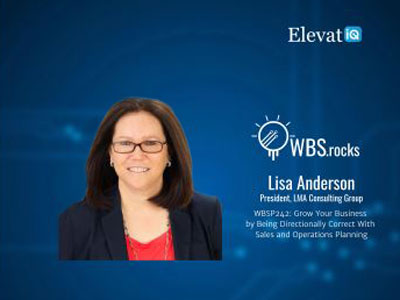
Sales and operations planning is a dark art, and most organizations typically have a very ad-hoc process of forecasting due to its nature. But it's critical to be directionally correct with your plan. Or you might end up missing opportunities or losing customers. [...]

Creating Predictable Revenue with Demand Planning Best Practices

At least 80% of clients contact us to find out how to predict the unpredictable. This is especially true in custom manufacturing, high growth and promotion-heavy industries; however, it remains accurate across the broad spectrum of manufacturing and distribution companies. Predicting the unpredictable demand plan starts by asking common [...]

Prescient Strategy & Manufacturing Resilience Using SIOP (S&OP)

To thrive post COVID, manufacturing resilience will be cornerstone. Customers expect personalization, customization, and rapid deliveries without disruption, and they will change suppliers, substitute products and do whatever is required to satisfy their customers or get what's needed. For example, although the preference is for online purchasing, consumers will return to stores to ensure quick, reliable supply of critical items.

Shortages Impacting Revenue & Forecasts

2021 was plagued with shortages. As discussed in clients’ demand planning/ forecasting meetings, history is not representative of the future. In one example, the client experienced material shortages and couldn’t sell what customers requested, and so carrying that forecast into the New Year would deliberately carry that issue into 2022.

Go to Top