News & Notes
LMA Consulting Group has expanded and reorganized its website to better reflect our growing capabilities and make it easier to access our services, flagship thought leadership, and practical supply chain resources.



LMA Consulting Group has expanded and reorganized its website to better reflect our growing capabilities and make it easier to access our services, flagship thought leadership, and practical supply chain resources.
Manufacturers and distributors invest significant time and resources in forecasting demand, balancing supply with demand through SIOP (Sales, Inventory & Operations Planning), and developing supply chain strategies.
In this Supply Chain Byte, Lisa Anderson discusses how microgravity is enabling unique manufacturing processes and why platforms such as Starship are designed with scale and industrial space applications in mind. For manufacturers, the message is clear: start thinking creatively about what may be possible as technology advances.
Although the Supreme Court ruling changed how tariffs are implemented, it did not eliminate them. With new trade agreements taking shape and additional negotiations underway, manufacturers and distributors should focus on strengthening supply chain resilience, profitability, and flexibility to navigate the evolving trade environment.
Lisa Anderson explains why AI cannot replace a formal SIOP process. While technology can improve analysis and decision-making, successful planning still requires strong business processes, cross-functional alignment, operational discipline, and organizational accountability.
Artificial intelligence (AI) is rapidly becoming a powerful tool in the supply chain leader's toolkit. Although there is no shortage of hype surrounding AI, the most successful organizations are finding practical ways to leverage its capabilities to improve decision-making, accelerate analysis, and uncover opportunities hidden within their data.
Artificial intelligence (AI) and digitization are fundamentally changing sustainability from a reporting exercise into an engineered outcome. AI and digital transformation can tie directly into how products are designed, how factories operate, and how supply chains are managed, not only creating customer and EBITDA value but also supporting sustainability and the triple bottom line.
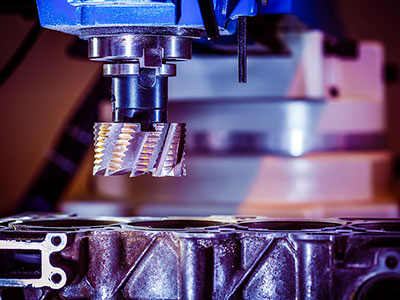
Advanced military manufacturing is rapidly becoming a cornerstone of national security and economic resilience. Manufacturing capability has become a strategic advantage — and advanced technologies such as AI, automation, robotics, 3D printing, and hyperscale digital manufacturing are reshaping the future of the defense industrial base.
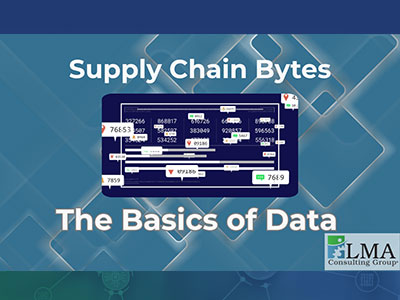
Artificial intelligence and advanced analytics can deliver powerful insights - but only if the data is right. In this Supply Chain Byte, Lisa Anderson explains why manufacturers must get back to the basics of data before relying on AI-driven decisions.
LMA Consulting Group is celebrating 21 years of helping manufacturers and distributors navigate changing supply chain demands, operational challenges and evolving technologies.