

909.630.3943

supply chain planning

AI and Digitization Driving the Triple Bottom Line

Artificial intelligence (AI) and digitization are fundamentally changing sustainability from a reporting exercise into an engineered outcome. AI and digital transformation can tie directly into how products are designed, how factories operate, and how supply chains are managed, not only creating customer and EBITDA value but also supporting sustainability and the triple bottom line.

Advanced Planning Systems (APS)

Advanced Planning Systems (APS) are no longer optional - they are becoming critical to smarter, faster and more profitable supply chain decisions. In this Supply Chain Byte, Lisa Anderson explains why manufacturers should be looking closely at APS. Recent client situations highlighted three key needs: scenario planning, constraint-based planning and end-to-end visibility & predictive insights.

Smart Planning

Planning is becoming more complex, but smarter planning makes the difference. In this Supply Chain Byte, Lisa Anderson outlines three key planning challenges manufacturers are facing today - and three ways to address them.

From Reactive to Proactive: Planning Strategies for Medtech Customer and Margin Success

Heightened geopolitical and logistics risks are making it difficult for companies to successfully navigate evolving global supply chain conditions while keeping customer and EBITDA growth goals intact. According to DP World, 82% of supply chain leaders view geopolitical disruption as a major risk, yet only a quarter feel fully prepared.

ERP As the Backbone of Supply Chain

Supply chain transformations and upgrades require the improved use of ERP. There is no doubt about it - ERP is the backbone of supply chain performance. Clients come to us to improve performance (typically profitable growth, customer service, and cash flow), and the better utilization of ERP was a key part of 100% of these clients and was required to deliver bottom line results.

MRP Might be an Old Concept Yet Remains Integral to Success

The value of MRP (material requirements planning) remains intact no matter the company size or industry. Determining how to automate the process, utilize the MRP system and potentially further enhance it with artificial intelligence and advanced technologies can yield powerful results.

The Critical Importance of Supply Chain Basics

In a world of constant distractions and disruptions, it's easy to overlook the fundamentals. In this Supply Chain Byte, Lisa Anderson explains why success still depends on getting the basics right—safety, quality, service, production, purchasing, planning and the use of ERP and related systems. Before adding complexity, make sure the foundation of your supply chain is strong.

VMI Case Study to Drive Win-Win Customer & Supplier Results

Taking your supplier / customer relationships to the next level of partnership is integral to supporting profitable growth with exceptional customer service and cash flow (ie. inventory turns) levels. Vendor managed inventory (VMI) can be integral to maximizing revenue/ service, profitability, and working capital.

What is SIOP? (7 Strategies for CEOs)

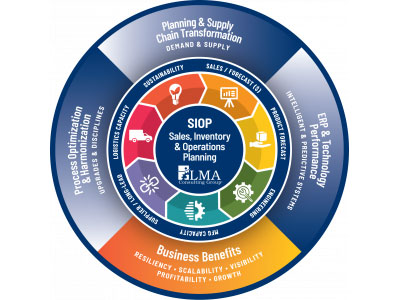
"SIOP" stands for Sales, Inventory, Operations Planning (SIOP). Depending on the industry or organization, you may also hear it referred to as “S&OP” or Sales and Operations Planning. Sometimes, it is even referred to as “IBP” or Integrated Business Planning. Typically, they mean the same thing. The most important words to emphasize are planning and alignment.

When is a Supply Chain ‘Trade Off’ NOT a Trade Off?

Increasing inventory levels is seen as a trade-off with service and efficiency levels; we find that a win-win-win is achievable. The key: Have the right inventory in the right place at the right time and gain a predictive view of demand to optimise your schedules to reduce inventory while increasing service and efficiency.

Go to Top