


Tariff Update
In this Supply Chain Byte, Lisa Anderson explains what the ruling means, provides historical context on tariffs and outlines what manufacturers should be thinking about now to protect profitability and remain competitive.
Tariffs continue to cause great stress in the financial markets and with certain industries. In fact, it divides manufacturers from distributors, logistics, and goods movement industries largely dependent on imports and trade.
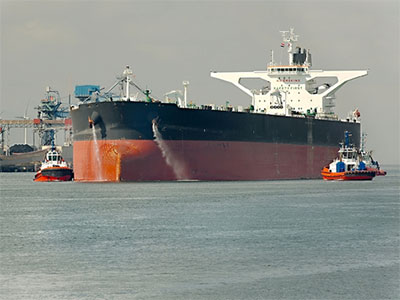
In this Supply Chain Byte, Lisa Anderson explains how the Ports of Los Angeles and Long Beach broke volume records in 2025 while reducing dwell times from three days to two and a half. These improvements relate to strategic investments and collaborative partnerships in the supply chain.
In this episode of Supply Chain Chats, Lisa Anderson talks with Michael Koeppel, director and founder of Lakelet Advisory Group, about the growing role supply chains play in business valuation. As supply chains have become more complex with tariffs, geopolitical risk and increased customer requirements, valuation models have evolved.
Project Vault is changing how the U.S. approaches critical minerals. In this Supply Chain Byte, Lisa Anderson explains Project Vault, the Strategic Critical Minerals Initiative focused on creating stockpiles and preferred trade zones and what discusses what manufacturers should be thinking.
Artificial intelligence and advanced semiconductors dominate investment and product cycles. Supply chains are not just evolving; proactive executives are reshaping supply chains with resilient, regional, and ready-to-scale strategies.
In this Supply Chain Byte, Lisa Anderson explains why sales forecasting must start with customers. By talking directly with customers, reviewing their forecasts, evaluating quotes, watching trends and incorporating demand plans into their SIOP process, manufacturers can plan to support growth and reliably meet customer expectations.
Lisa Anderson is drawing attention to the growing importance of Greenland and its role in safeguarding global supply chains in an increasingly volatile environment.
The storm that blanketed the U.S. had impacts that reverberated throughout the supply chain. Artificial intelligence and advanced technologies can refocus efforts from reactive to proactive and improve the outcome for people and mitigate further supply chain disruptions.
U.S. labor productivity soared at a 4.9% rate in the most recent quarter as compared to the typical annualized rate of 2% during the current business cycle. We are seeing productivity gains across the board as manufacturers utilize predictive processes such as SIOP and advanced technologies such as AI, robotics, and the automation of processes and better utilization of ERP.